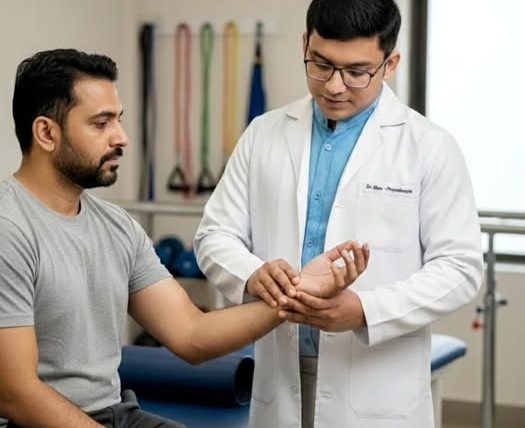
Core Benefits of Physiotherapy for the Wrist
Restoring Function and Coordination (Rehabilitation): For serious injuries like fractures or conditions requiring surgery, physiotherapy is essential for full recovery. It involves functional exercises and dexterity drills to retrain the wrist and hand for everyday activities, work, and hobbies.
Pain Relief and Inflammation Reduction: Physiotherapy utilizes a variety of techniques—such as manual therapy (joint mobilization and soft tissue manipulation), heat/cold therapy, and modalities like ultrasound or NMES—to directly reduce discomfort and inflammation in the wrist joint and surrounding tissues.
Improved Range of Motion (Mobility): After an injury, surgery, or due to chronic conditions like arthritis, the wrist often becomes stiff. Physiotherapists use targeted exercises and stretches to safely increase flexibility and restore the wrist’s full movement capability, making daily tasks easier.
Strengthening and Stability: A tailored program of therapeutic exercises, including resistance training and grip work, builds strength in the wrist and forearm muscles. This provides better support and stability to the joint, which is crucial for reducing strain and minimizing the risk of re-injury.
Physiotherapy for Specific Wrist Conditions
Fractures (Post-Immobilization): Crucial for regaining lost range of motion and rebuilding muscle strength (atrophy) following the removal of a cast or brace.
Carpal Tunnel Syndrome: Effective in mild to moderate cases by using nerve gliding exercises, wrist stretches, and manual therapy to reduce compression on the median nerve.
Tendonitis (e.g., De Quervain’s): Helps reduce inflammation and pain through soft tissue mobilization, pain-relieving modalities, and exercises focused on stretching and strength to prevent recurrence.
Arthritis: Customized exercise programs enhance joint flexibility and muscle strength, which helps manage pain and improve daily function.
Non-Specific Chronic Pain: Combining stabilization training with grip strengthening exercises has been shown to significantly improve pain, function, and muscle strength.
Techniques Used in Wrist Physiotherapy
Manual Therapy: Hands-on techniques like joint mobilization (gentle, controlled movements to increase joint play) and soft tissue mobilization (massage/manipulation of muscles and tendons).
Therapeutic Exercise: A customized plan of stretching, strengthening, and functional exercises.
Ergonomic and Posture Correction: Education on proper wrist alignment and modifications to work or home environments to prevent strain, particularly in overuse injuries.
Modalities: The use of heat, cold, ultrasound, or electrical stimulation to manage pain and inflammation.
If you need Physiotherapy treatment contact us
Women’s Children’s & General Hospital Advanced Physiotherapy & Rehab Solution House #48/6. Road #9/A, Satmasjid Road, Dhanmondi, Dhaka-1209, Bangladesh.
Contact : +8801911886974

Moving the goalposts sorry i was triple muted, so what do you feel you would bring to the table if you were hired for this position. A better understanding
Neque porro est qui dolorem ipsum quia quaed inventor veritatis et quasi architecto beatae vitae dicta sunt explicabo. Aelltes port lacus quis enim var