
Physiotherapy is a highly effective, evidence-backed, and non-invasive treatment for managing various types of cervical (neck) pain, including acute, chronic, and post-injury conditions. It’s often recommended as one of the most effective non-surgical options.
Physiotherapy works by addressing the root cause of the pain—such as poor posture, muscle weakness, or restricted joint movement—rather than just masking the symptoms.
 Key Goals and Benefits of Physiotherapy
The overall goal of physiotherapy for cervical pain is to reduce discomfort, restore function, and prevent recurrence.
Short-Term Benefits – Pain Reduction and immediate relief from stiffness.
Long-Term Benefits
Strengthened neck, shoulder, and upper back muscles.
Increased Range of Motion and neck mobility.
Improved posture and body mechanics.
Muscle relaxation and decreased tension.
Reduced recurrence and prevention of future injuries.
Alleviation of pressure on irritated nerves.
Enhanced quality of life and functional independence.
 Effective Physiotherapy Techniques
Physiotherapy treatment for the neck is typically individualized and may involve a combination of active and passive modalities.
1. Exercise Therapy (Active) 
This is often considered the most crucial and evidence-based component for long-term management. It requires active patient participation.
Strengthening Exercises: Targets the deep stabilizing muscles (like the deep cervical flexors) to support the spine, often involving chin tucks and isometric holds (contracting muscles without moving the joint).
Range of Motion (ROM) Exercises: Gentle movements (flexion, extension, rotation, side-bending) to improve flexibility and reduce stiffness.
Postural Training: Exercises and education to correct poor habits, such as forward head posture, and reinforce a neutral spine position.
2. Manual Therapy (Passive) 
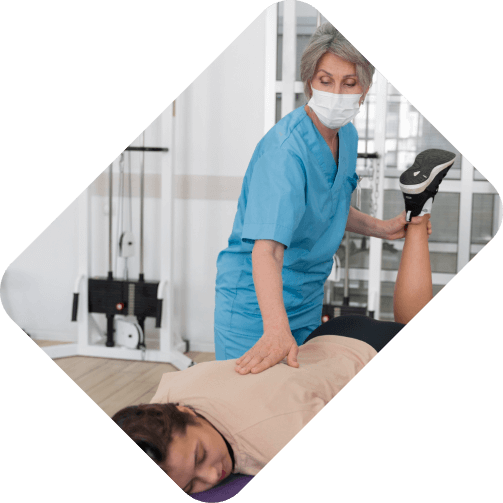
These hands-on techniques are performed by the therapist to restore normal joint mechanics and relieve muscle tension.
Joint Mobilization: Gentle, rhythmic, skilled movements applied to stiff cervical joints to restore motion.
Soft Tissue Manipulation/Massage: Applied to tight muscles (like the trapezius and levator scapulae) to reduce tension and improve circulation.
Cervical Traction: A gentle pulling force, applied manually or mechanically, to create space between the vertebrae, which can relieve pressure on compressed nerve roots (e.g., in cases of cervical radiculopathy).
3. Adjunctive Modalities (Passive) 
These techniques are typically used to reduce pain and inflammation, preparing the neck for active exercises.
Heat and Cold Therapy: Heat packs help increase blood flow and relax tight muscles; cold packs help reduce inflammation and numb the painful area.
Electrotherapy: Techniques like TENS (Transcutaneous Electrical Nerve Stimulation) or IFC (Interferential Current) use mild electrical currents to disrupt pain signals.
Ultrasound: Uses sound waves to penetrate deep tissues, promoting healing and relaxation.
 Specific Conditions and Effectiveness
Physiotherapy is proven to be effective for a wide range of cervical conditions:
Non-Specific Neck Pain: Highly effective in reducing pain and improving function, especially when incorporating exercise.
Cervical Spondylosis (Degenerative Disc Disease): Treatment focuses on joint mobilization, pain relief modalities, and strengthening exercises to support the degenerated spine.
Cervical Radiculopathy (Pinched Nerve): Manual therapy (especially mobilization and possibly traction) combined with exercise is effective for relieving nerve compression and related arm/shoulder symptoms.
Whiplash-Associated Disorders (WAD): Early, guided movement and active rehabilitation are generally more effective than prolonged rest or collars.
If you need Physiotherapy treatment contact us
Women’s Children’s & General Hospital Advanced Physiotherapy & Rehab Solution House #48/6. Road #9/A, Satmasjid Road, Dhanmondi, Dhaka-1209, Bangladesh.
Contact : +8801911886974
Moving the goalposts sorry i was triple muted, so what do you feel you would bring to the table if you were hired for this position. A better understanding
Neque porro est qui dolorem ipsum quia quaed inventor veritatis et quasi architecto beatae vitae dicta sunt explicabo. Aelltes port lacus quis enim var