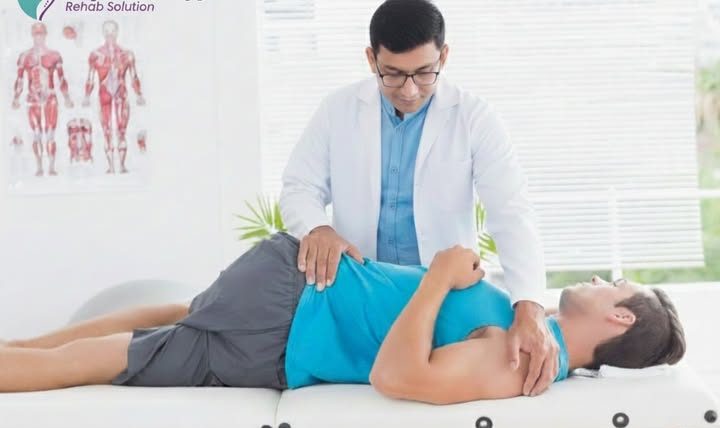
Physiotherapy is an effective and highly recommended first-line treatment for both acute (short-term) and chronic (long-lasting) lower back pain (LBP). It works by reducing pain intensity, improving functional mobility, and decreasing disability, often through a combination of tailored exercises and hands-on techniques.1
 Key Benefits of Physiotherapy for LBP
Physiotherapy is often the cornerstone of non-surgical management and aims to help patients actively manage their condition and prevent recurrence.2 The primary benefits include:
Significant Pain Reduction: Studies, particularly for chronic LBP, show that structured physiotherapy programs can lead to a clinically relevant decrease in pain intensity.3
Improved Function and Mobility: Interventions, especially exercise programs, significantly enhance functional ability, making it easier to perform daily activities.4
Reduced Disability: Measures of disability, like the Oswestry Disability Index (ODI), show notable improvement following physiotherapy.5
Patient Empowerment: Education and self-management strategies provided by a physiotherapist give patients the tools to understand their pain and manage it long-term.6
 Common Physiotherapy Interventions
Physiotherapy treatments are typically individualized and multimodal, combining active and passive therapies.7
1. Active Therapy (Exercise and Movement)8
This is the most critical component, supported by the highest level of evidence. The goals are to restore strength, flexibility, and endurance.9
Specific Exercise Programs: These include:
Core Stabilization Exercises: Strengthening the deep muscles of the abdomen and back to better support the spine (e.g., Bird Dog, Plank, Pelvic Tilts).10
Shutterstock
* **Strengthening and Endurance Exercises:** Targeting the gluteal muscles, abdominals, and other supporting muscles.
* **Flexibility and Stretching:** Exercises to improve range of motion and reduce muscle tension (e.g., Knee-to-Chest stretch, Cat-Cow stretch).
Aerobic Exercise: Low-impact activities like walking, swimming, or cycling to improve overall fitness and mobility.11
Postural and Body Mechanics Education: Learning proper techniques for lifting, sitting, standing, and performing daily tasks to prevent strain.12
2. Manual Therapy
These are hands-on techniques used by the physiotherapist, often combined with exercise.13
Mobilization and Manipulation: Gentle, rhythmical movements or controlled thrusts applied to the spinal joints to restore normal movement and reduce pain.14
Massage/Soft Tissue Mobilization: Techniques to relax tight or spasmodic muscles and improve blood flow.15
3. Adjunctive Modalities (Passive Therapy)16
These treatments may provide short-term pain relief but are generally used in combination with active exercises.
Heat and Cold Therapy: Applying heat (for stiffness) or cold (for acute inflammation) to the affected area.17
Transcutaneous Electrical Nerve Stimulation (TENS): Using a low-voltage electrical current to block pain signals.18
Ultrasound: Using sound waves to promote tissue healing and reduce muscle spasms.19
 Important Considerations
While physiotherapy is effective, it’s important to note:
Chronic LBP Effectiveness: Physiotherapy-prescribed exercise programs are effective for reducing pain in chronic LBP, but research has not definitively established one specific technique or exercise format as superior to all others.20 The key is adherence to a tailored, structured program.21
Acute LBP Effectiveness: For acute LBP, manual therapies (like joint mobilization) are often used for short-term pain relief and are often combined with exercise.22
Individualized Approach: The most successful treatment involves a comprehensive, patient-centered approach that is tailored to the individual’s specific symptoms, goals, and underlying cause of pain.
If you need Physiotherapy treatment contact us
Women’s Children’s & General Hospital Advanced Physiotherapy & Rehab Solution House #48/6. Road #9/A, Satmasjid Road, Dhanmondi, Dhaka-1209, Bangladesh.
Contact : +8801911886974
Moving the goalposts sorry i was triple muted, so what do you feel you would bring to the table if you were hired for this position. A better understanding
Neque porro est qui dolorem ipsum quia quaed inventor veritatis et quasi architecto beatae vitae dicta sunt explicabo. Aelltes port lacus quis enim var